

Is Bristol Safe? Crime Rate, Crime Map and Safest Areas (2026)
Is Bristol safe? For everyday life, yes. Close to nine in ten people who live here feel safe in their own area by day (Bristol City Council, 2025). Maybe you’ve been offered a job in Bristol, or a place at one of its universities. Maybe your son or daughter has. Either way, you’re probably picturing the walk home after a night out.
The figures hold a puzzle. Bristol’s recorded crime rate sits well above the England and Wales average. Yet most residents feel safe. Bristol’s crime figure is pushed up by shops, cars, bikes, violence and busy nights out. Most of that violence is harassment or violence without injury (Home Office, 2026). On the street, pickpocketing is about 10 times as common per resident in London as in Bristol (Home Office, 2026).
Key Takeaways
- Close to nine in ten Bristol residents feel safe in their own area by day (Bristol City Council, 2025).
- In quiet wards such as Redland, about 98% of residents feel safe by day (Bristol City Council, 2025).
- Bristol’s recorded crime rate is 131.0 per 1,000 residents, 57% above the national 83.2 (Home Office, 2026). Bristol’s crime figure is pushed up by shops, cars, bikes, violence and busy nights out.
- Pickpocketing is about 10 times as common per resident in London as in Bristol (Home Office, 2026).
- Lock your bike, and plan your trip home.
In this guide
- Is Bristol safe? The short answer
- What is Bristol’s crime rate?
- Is Bristol dangerous? Which crimes are more and less common
- Is Bristol safer than London?
- Bristol crime map: where crime is highest and lowest
- How safe do people in Bristol feel?
- Is Bristol safe at night?
- Is Bristol diverse and welcoming?
- Is Bristol safe for students?
- How we worked this out
- Frequently asked questions
Is Bristol safe? The short answer
Yes. Most people who live in Bristol feel safe on their own streets, especially in daylight. In the council’s Quality of Life survey, close to nine in ten residents (86.6%) feel safe by day (Bristol City Council, 2025). Fear of crime affects daily life for only about one in four (24%). After dark, just over half feel safe in their area (56.4%). So plan your trip home.
The official crime rate measures something different from how a street feels. It counts every crime recorded in Bristol, then divides by the people who live here. Crimes against visitors and shops count too. A per-resident rate isn’t your personal chance of being a victim. Bristol’s rate runs 57% above the England and Wales average (Home Office, 2026). Most big cities sit above it too. Bristol has 34 wards. These are the small districts the council uses for its statistics. Quiet residential ones such as Stoke Bishop, Redland, Clifton and Cotham record some of the lowest rates.
We’d agree with the University of Bristol, which tells its own students that “Bristol is, overall, a safe city” (University of Bristol, 2026). You can also check for yourself. Search any Bristol street or postcode on police.uk to see recent reported crime nearby. Busy streets show more, because crimes against shoppers and visitors count there. The map shows police neighbourhoods rather than wards. Map locations are approximate, so police.uk totals won’t match ours exactly (data.police.uk, 2026).
What is Bristol’s crime rate?
Look up Bristol’s crime rate and you’ll find several different answers, which doesn’t help anyone trying to decide. The official figure is 131.0 crimes per 1,000 residents in the year to March 2026 (Home Office, 2026). That’s 64,759 offences, leaving out fraud. Offences rose 2.4% on the year before, when the rate stood at 128.0. Police log anti-social behaviour, such as rowdiness or street noise, separately from crime.
Is Bristol’s rate high? Against the England and Wales rate of 83.2 per 1,000, yes (Home Office, 2026). So why do most residents still feel safe? Look at what pushes the rate up. Shoplifting runs at 1.57 times the national rate, vehicle crime at 1.94 times and bike theft at 2.45 times. Public order offences, such as threatening behaviour in the street, run at 2.24 times.
Violence plays a part too. Violence against the person runs at 1.51 times the national rate (Home Office, 2026). About four in five of these offences are harassment or violence without injury. The busy Central ward has 4.5% of Bristol’s residents, but about one in six of the city’s recorded incidents, 16.4% (data.police.uk, 2026). Crimes against visitors who live elsewhere still count.
Some of what pushes the rate up is easy to imagine. Think of a bike locked only by its wheel, a phone on a café table or a crowded Saturday night. Small habits make you a harder target.
Bristol’s rate has also risen in recent years. Since 2022, it has climbed from 110.0 to 131.0, while England and Wales eased from 85.4 to 83.2 (Home Office, 2026).
If you’ve seen other figures quoted, there’s a simple reason: each site measures something slightly different. Crime-statistics sites show 105 per 1,000 based on a daytime population. That’s police.uk crimes divided by an older estimate of how many people are in the city by day. Sites that include anti-social behaviour show about 148. Older guides quote 118 from 2023 data. And the council’s own needs assessment gives 135.5, worked out from police force data. We lead with the Home Office rate because it’s the official count, measured per resident.
The police’s own public crime map, police.uk, gives a second view. It logged 62,673 crimes in Bristol from September 2025 to August 2026, leaving out anti-social behaviour (data.police.uk, 2026). That’s 126.8 per 1,000 residents. Anti-social behaviour added another 10,747 reports. The map’s count rose 10.1% on the 12 months before, a faster climb than the official figure shows. The two cover different months, so their rises don’t match. The map also counts a few per cent fewer crimes, because some offences have no exact location.
Home Office figures put Bristol’s recorded crime rate at 131.0 per 1,000 residents in the year to March 2026 (Home Office, 2026). The England and Wales rate was 83.2, so Bristol sits 57% above the national average. Manchester, Nottingham and Liverpool also sit well above it. Shoplifting, vehicle and bike theft, violence and public order offences push Bristol’s figure up. So do crimes against visitors who aren’t residents.
Is Bristol dangerous? Which crimes are more and less common
No. For most people going about their day, Bristol is a safe city. What differs from the national picture is the mix of crime. Among everyday crimes, bike theft stands out most, at about two and a half times the England and Wales rate (Home Office, 2026). A few crimes are rarer, including pickpocketing.
Public order offences run at about double the national rate. Robbery is about double too. Violence against the person is about one and a half times the England and Wales figure (Home Office, 2026).
At the other end of the scale, possession of weapons, such as carrying a knife, is below the national rate. Theft from the person, meaning pickpocketing and snatch theft, is under half the England and Wales rate. That national figure includes London, where this kind of theft is concentrated. Drug offences sit just below average too.
| Crime | Bristol per 1,000 | England and Wales | Times national |
|---|---|---|---|
| Violence against the person | 47.41 | 31.48 | 1.51 |
| Theft offences (all) | 42.53 | 25.93 | 1.64 |
| Public order offences | 15.56 | 6.96 | 2.24 |
| Robbery | 3.01 | 1.39 | 2.17 |
| Bicycle theft | 2.09 | 0.85 | 2.45 |
| Vehicle offences | 9.78 | 5.03 | 1.94 |
| Home burglary | 3.57 | 2.49 | 1.43 |
| Possession of weapons | 0.85 | 1.00 | 0.86 |
| Theft from the person | 0.8 | 1.77 | 0.45 |
| All recorded crime (excluding fraud) | 131.0 | 83.2 | 1.57 |
Source: Home Office police recorded crime, year to March 2026, and ONS mid-2024 population. “Times national” is the Bristol rate divided by the England and Wales rate.
Theft is where your own habits help most. Vehicle crime runs at almost twice the national rate, so a few small routines really pay off. Some easy ways to protect yourself:
- Lock your bike’s frame, not just a wheel, to something fixed.
- Keep your phone out of sight on crowded streets and at bus stops.
- Leave nothing on show in a parked car. In Clifton ward, vehicle crime makes up about a quarter of all crimes (26%), against 7% across Bristol.
- Get home by licensed taxi.
- If something’s stolen, report it online or call 101, the police number for non-emergencies (Avon and Somerset PCC, 2026).
When is crime highest? The October peak
Autumn is when Bristol fills up again. Recorded crime rises with it, so we looked at three years of police.uk crime, month by month (data.police.uk, 2026). By student areas, we mean the Central, Clifton, Clifton Down, Cotham, Redland, and Hotwells and Harbourside wards. In those areas, crime runs about 13% above its monthly average in October. February is the quietest month.
Two kinds of theft jump in October. Across the city, bike theft runs 45% above its monthly average that month, and theft from the person 29% above (data.police.uk, 2026). Both are small shares of Bristol’s crime, but they’re the easiest to guard against. Violence and sexual offences barely change through the year. The peak lines up with the weeks when new students arrive and are still learning the streets. If you’re arriving in September, buy a good bike lock in your first week.
Is Bristol safer than London?
For the crimes you might meet on the street, Bristol compares well with London. Per resident, London has about 10 times Bristol’s rate of theft from the person, such as pickpocketing (Home Office, 2026). In inner London, it’s about 20 times. A year earlier the gap was similar, at 0.91 per 1,000 in Bristol against 10.84 in London.
Street robbery is about one and a half times as common in London, and 2.4 times in inner London (Home Office, 2026). Weapons offences were about the same in the year to March 2026. Bristol’s weapons rate was higher the year before. Against England and Wales, Bristol is below average for pickpocketing but above it for robbery.
| Offence, per 1,000 residents | Bristol | England and Wales | London | Inner London |
|---|---|---|---|---|
| Theft from the person (pickpocketing, bag and phone snatching) | 0.80 | 1.77 | 8.07 | 16.66 |
| Robbery of personal property | 1.64 | 0.91 | 2.51 | 3.94 |
| Possession of weapons | 0.85 | 1.00 | 0.78 | 1.04 |
Source: Home Office police recorded crime by Community Safety Partnership, year to March 2026, with ONS mid-2024 population; our calculation. Inner London is 14 boroughs including the City of London. Robbery here is of personal property only, so it’s lower than the all-robbery figure in the crime-type table.
Overall recorded crime gives a different answer. Count every offence per resident, and Bristol’s 131.0 per 1,000 is about level with inner London’s 129.2 (Home Office, 2026). Outer London records 75.6. London as a whole comes to 96.3, lower than Bristol overall but with far more street theft.
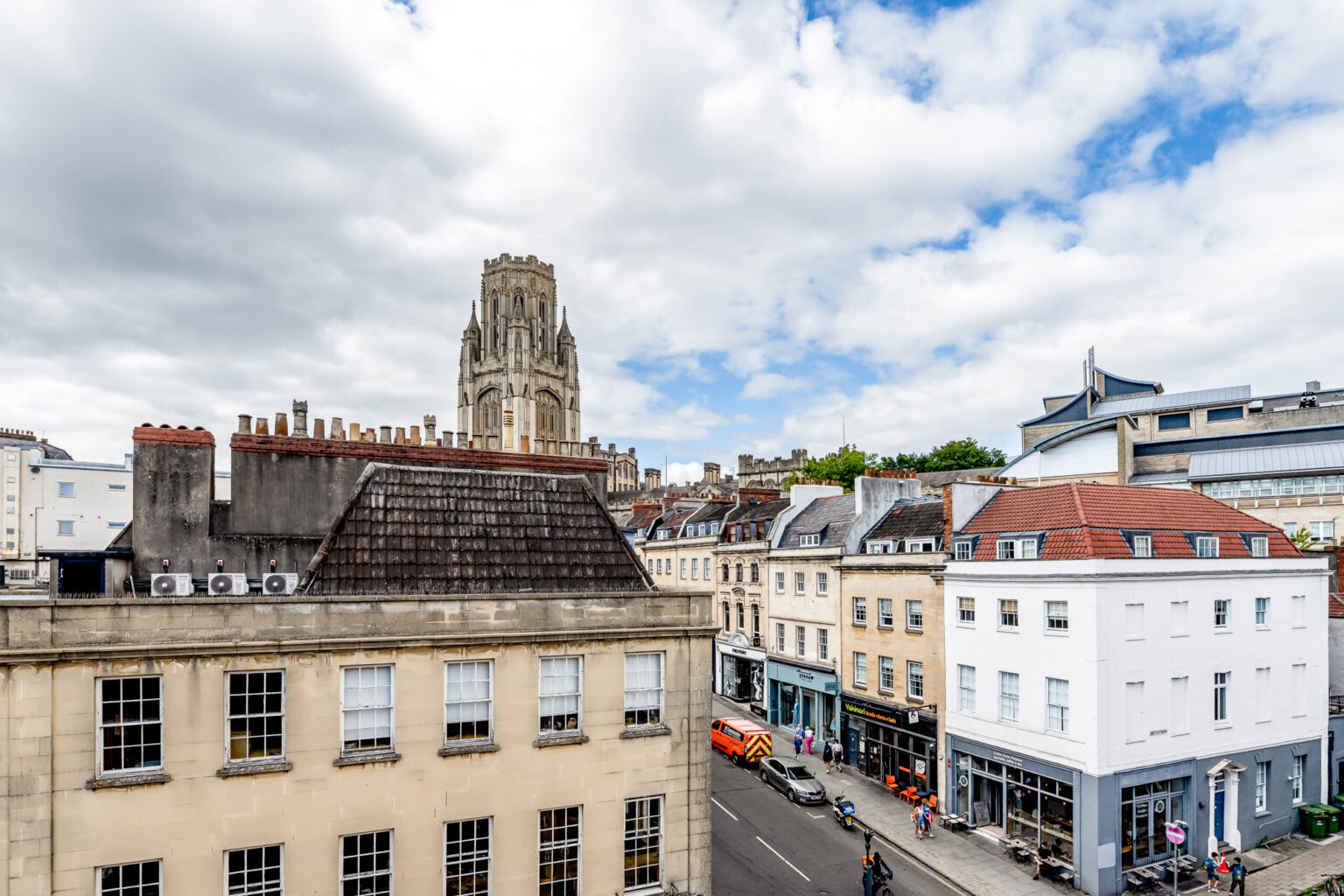
Why do city rates vary so much? Council areas differ in how much quiet suburb they take in. Inner London is 14 busy central boroughs, including the City of London, while outer London’s 19 are mostly suburbs. Suburbs pull an average down. Bristol’s boundary sits close around a busy centre that serves a much wider area. Crimes against shoppers, commuters and night-time visitors count towards its rate, but those visitors aren’t residents.
Other council areas range from Manchester’s 142.7 per 1,000 to 79.0 in neighbouring Bath and North East Somerset (Home Office, 2026). Nottingham records 124.9, Liverpool 124.1, Leeds 114.6 and Birmingham 114.2. Newcastle upon Tyne is at 107.4, Sheffield at 96.9 and Cardiff at 93.8. Every city has busy centres and quiet streets. In daily life, your own street and your evening plans matter more than any city-wide figure.
Bristol crime map: where crime is highest and lowest
Bristol changes a lot from one district to the next. So does its crime. We matched a year of police.uk crimes, to August 2026, to every ward (data.police.uk, 2026). Stoke Bishop comes out lowest, at 51.3 crimes per 1,000 residents. St George Troopers Hill, Redland, Clifton and Cotham follow close behind, all at 62.0 crimes per 1,000 or below. The city centre is highest by a long way.
The table sets the five lowest and five highest wards beside how safe residents feel after dark. The gaps between wards are wide. For a closer look at the quietest districts, read our guide to the safest areas in Bristol.
| Ward | Crimes per 1,000 residents | Feel safe after dark | Main crime type |
|---|---|---|---|
| Stoke Bishop | 51.3 | 73.8% | Violence and sexual offences |
| St George Troopers Hill | 51.6 | 64.6% | Violence and sexual offences |
| Redland | 58.0 | 78.2% | Violence and sexual offences |
| Clifton | 58.2 | 81.9% | Violence and sexual offences |
| Cotham | 62.0 | 75.6% | Violence and sexual offences |
| Hartcliffe and Withywood | 147.8 | 38.2% | Violence and sexual offences |
| Lockleaze | 176.7 | 47.9% | Violence and sexual offences |
| Lawrence Hill | 193.8 | 31.2% | Violence and sexual offences |
| Hotwells and Harbourside | 299.6 | 71.6% | Violence and sexual offences |
| Central | 438.0 | 53.5% | Violence and sexual offences |
Sources: data.police.uk, September 2025 to August 2026, excluding anti-social behaviour; ONS mid-2024 population; Bristol City Council Quality of Life survey 2024/25. City centre rates count crimes against visitors and shoppers, not only residents.
Central records Bristol’s highest rate, at 438.0 crimes per 1,000 residents in the year to August 2026 (data.police.uk, 2026). Hotwells and Harbourside comes second, at 299.6. Lawrence Hill, just east of the city centre, is third at 193.8. Lockleaze, in north Bristol, is fourth at 176.7. Hartcliffe and Withywood, in the south of the city, completes the five at 147.8. A high rate shows where and when crimes were recorded. It says nothing about residents.
The Central ward is where the whole city comes to shop, work and go out. It covers the shopping streets of Broadmead and Cabot Circus, plus the Old City, Castle Park and Park Street. Only 4.5% of Bristol’s residents live there. Yet it records 16.4% of the city’s incidents, counting anti-social behaviour reports as well as crimes (data.police.uk, 2026). It also has 12.2% of Bristol’s violence and sexual offences, and 23.1% of its shoplifting. The crime follows the crowds. Most of the crowds are shoppers, commuters and people on nights out.
Hotwells and Harbourside feels safe to the people who live there. In the council’s survey, 91.3% of its residents feel safe by day and 71.6% after dark (Bristol City Council, 2025). Its busiest map points are on or near a nightclub, with 489 incidents in a year (data.police.uk, 2026). The ferry terminal comes next, with 278. Most people at both are visitors, and it’s one of Bristol’s smallest wards by population. Map points are approximate, and their counts include anti-social behaviour reports.
If you searched for areas to avoid, what matters more is place and time. Take more care after dark on the centre’s busiest nightlife streets and around the Harbourside’s late venues. The map shows crime gathering there, on or near a nightclub. In Broadmead, guard your bag. Lawrence Hill, Lockleaze, and Hartcliffe and Withywood also record higher rates than most of the city. After dark there, keep to busy, well-lit routes, as you would in any city you’re still learning. Our ward guide covers all 34 wards, including where to take more care. If you’re still choosing a neighbourhood, see where to live in Bristol as a student.
How safe do people in Bristol feel?
How safe a street feels matters as much as what the police record. Light, crowds and the time of night all change it. In their own area, close to nine in ten Bristol residents feel safe by day, 86.6% (Bristol City Council, 2025). After dark, it’s just over half, 56.4%. In 13 of 34 wards, 90% or more feel safe by day, and the median ward is about 88%. City-centre figures are lower: 72.2% by day, 31.5% after dark.
After dark, the gap isn’t the same for everyone. Among women, just under half (48.7%) feel safe in their own area after dark, against 64.7% of men (Bristol City Council, 2025). Anti-social behaviour weighs on people too. In the same survey, 42.7% of residents called it a problem where they live.
What surprised us most is that a high crime rate doesn’t always mean people feel unsafe. Hotwells shows it best. Some busy wards with lots of recorded crime still feel safe to the people who live there. Some quieter ones don’t. Lighting, busy pavements and knowing a street well probably all play a part.
Take Hotwells and Harbourside. It records Bristol’s second-highest crime rate (data.police.uk, 2026). Yet about seven in ten of its residents feel safe after dark, 71.6% against 56.4% across Bristol (Bristol City Council, 2025). Central has the highest rate by far. Even so, 53.5% of its residents feel safe after dark, close to the city figure. In both wards, much of the recorded crime involves visitors, shoppers and nightlife.
Some wards tell the opposite story. Hengrove and Whitchurch Park records less crime than Bristol overall, yet only 36.0% feel safe after dark (data.police.uk, 2026; Bristol City Council, 2025). In Filwood, where the crime rate is close to Bristol’s, only 25.2% do. A crime rate alone can’t tell you how a street will feel to you.
Is Bristol safe at night?
Nights out are part of life in Bristol. The city puts real effort into keeping them safe, and it has the awards to show for it. Purple Flag is an award for town centres that are well run after dark, covering 5pm to 5am. Bristol’s city centre held it for the 16th year running in 2026 (Bristol BID, 2026). Bristol Nights, a partnership led by Bristol City Council, supports the city from 6pm to 6am (Bristol Nights, 2026).
Bristol Nights also runs a Women’s Safety Charter, launched in 2022. Venues that sign it commit to training staff to respond and to designing their spaces for safety (Bristol Nights, 2026). Bristol Rules sets six rules for a night out (Bristol Nights, 2026). Two are “Out Together Home Together” and “Call It Out”. The partners include the University of Bristol and UWE Bristol (the University of the West of England).
On Friday and Saturday nights, Bristol Safe Space at Night opens from 10pm to 4am on the Central Promenade. Look for it opposite the Hippodrome theatre. Volunteers offer first aid, phone charging, spiking test kits and someone to talk to (Bristol BID, 2026). Spiking means someone secretly adds drugs or alcohol to your drink. Bristol BID, the city centre business group, runs the space with Avon and Somerset Police. It launched on 4 September 2026, after earlier pilots. It isn’t an emergency medical service, so call 999 if someone is seriously hurt.
Inside bars and clubs, there’s another quiet safeguard. If someone is bothering you on a night out, go to the bar and ask the staff for “Angela”. It’s a discreet way to report harassment and get help (Avon and Somerset Police, 2026).
For the trip home, use a licensed taxi or a private hire car you’ve booked ahead. Private hire cars can’t be flagged down in the street, so always book them (Bristol City Council, 2026). A hackney carriage is a licensed taxi you can hail, and it has a white and red plate. Private hire plates are yellow and red. Check the driver’s badge too: it shows their photo, licence number and expiry date. Buses are an option as well. The m1 metrobus has run 24 hours a day, every day, since 31 August 2025 (First Bus, 2025). Travelwest, the regional travel information site, lists the other night routes (Travelwest, 2026).
Picture a Saturday night out in the centre. You and two friends leave a bar together just after midnight, phones still charged. The private hire car you booked earlier pulls up, and you check its plate and badge first. That’s Bristol Rules’ “Out Together Home Together” in action.
Walking home alone
Walking home alone feels different for everyone. Age makes less difference than you might think. Among 16 to 24 year olds, about half (50.3%) feel safe in their own area after dark (Bristol City Council, 2025). That’s close to the city-wide 56.4%.
If a street, park or path ever made you feel unsafe, you can tell the police through StreetSafe. You can report anonymously (Avon and Somerset Police, 2026). If you’re in immediate danger, call 999 instead.
Two small habits help on the walk home. Charge your phone before you leave, then share your route with a friend or family so someone expects you. The University of Bristol adds its own advice: keep to well-lit, busy routes. Its security team also gives out free personal attack alarms from Royal Fort Lodge (University of Bristol, 2026).
Arriving late in Bristol
Landing late, or stepping off the last train, can feel daunting in a city you don’t know yet. On trains and at stations, including Temple Meads, Bristol’s main station, you can text 61016 to report a crime (National Rail, 2026). The text line runs 24 hours a day. In an emergency, always call 999. From the station, take a licensed taxi or a car you’ve booked ahead. If you’re an international student, our guide to the first week in Bristol covers the days after you land. There’s also a page on getting from Bristol Airport to our student apartments.
Is Bristol diverse and welcoming?
Bristol is a diverse city, and if you ever face abuse for who you are, free help is close by. At the 2021 Census, 18.9% of residents were not White (ONS via Nomis, 2021). That includes 6.6% Asian, 5.9% Black, 4.5% Mixed and 1.9% from other ethnic groups. Beliefs vary widely too. Just over half of residents, 51.4%, said they had no religion. Muslims made up 6.7%, the same share as in England.
No city is perfect. It helps to know what to do if something goes wrong. If someone targets you for your race, religion or who you are, report it. You can do that online or in person, or call 999 if you’re in danger right now (Avon and Somerset Police, 2026). The police also point people to SARI (Stand Against Racism and Inequality). This charity offers free, confidential support, and you can call it on 0117 942 0060 (SARI, 2026).
Is Bristol safe for students?
If you’re coming to Bristol to study, or sending someone you love, the student areas matter most. So we compared them. We looked at crime in the main student areas of Bristol and seven other university cities (data.police.uk, 2026). Cotham, a short walk from the University of Bristol, records 65.7 crimes per 1,000 residents. That ties with Newcastle’s North Jesmond, at 66.3, for the lowest rate.
Clifton Down, home to Whiteladies Road, sits mid-table at 93.6. That puts it below Birmingham’s Bournbrook and Selly Park, at 97.6, and Nottingham’s Radford, at 117.5 (data.police.uk, 2026). It’s above Leeds’ Headingley and Hyde Park, at 79.6, and Liverpool’s Greenbank, at 79.4. Mid-table is a fair place to be.
For Bristol, we show its two wards with the most full-time students outside the centre, Clifton Down and Cotham. For each of the seven other cities, we took the ward with the highest share, leaving out the city-centre ward. Student shares come from the 2021 Census. City centres mix in shoppers and nightlife, so they’d skew the picture.
On campus, there’s extra help on your side. University of Bristol Security Services work 24/7 across the campus, with an emergency line on 0117 331 1223 (University of Bristol, 2026). At UWE Bristol, the 24-hour urgent campus line is 0117 328 9999 (UWE Bristol, 2026).
Our 15 homes are in and around Clifton, from the Clifton Triangle to Park Street. Every one is a short walk from campus. Beech House, Redmayne House and Alison Court are in Clifton, with Charlotte’s Rise and 18 Charlotte Street near Park Street.
There’s plenty to enjoy nearby. Clifton Village, the Downs and the Suspension Bridge are all close by. Walk a little further, and the neighbouring districts of Cotham and Redland are within easy reach too.
If you’re joining us from overseas, deposits can be paid through WeChat Pay, and there is a Mandarin-speaking team.
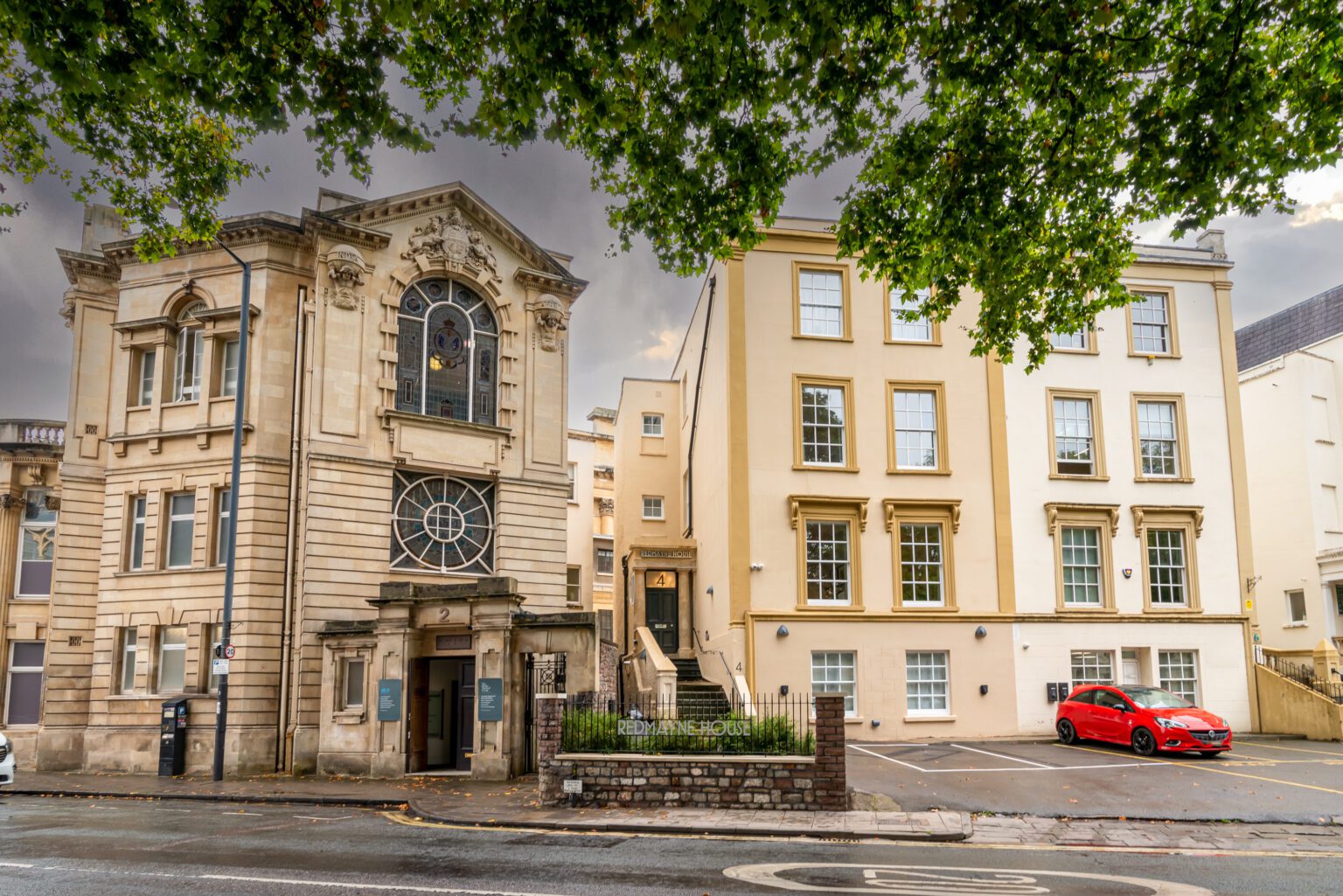
For more on the buildings themselves, read our answers to student accommodation security questions. Families will find more on our page for parents and carers, and our FAQs cover the practical questions.
A safe home for students
As you get ready to study in Bristol, your safety comes first. Moving cities is a little nerve-racking. That’s doubly true if you’re arriving from another country and don’t know a single street yet. For most students, Bristol is a lively, inclusive and safe place to call home.
Most residents feel safe in their area, 86.6% by day (Bristol City Council, 2025). Bristol’s recorded crime rate sits above the England and Wales average, like most big cities. Theft, violence and busy nights out push it up. Avon and Somerset Police, the council, the universities and local businesses run joint schemes to keep nights out safe. You’ll find them in the night-time section.
The city centre holds Purple Flag status, too. It won it for the 16th year running in 2026 (Bristol BID, 2026). The award recognises town centres with a safe, well-run evening and night-time economy, from 5pm to 5am.
Our homes are in and around Clifton, near the Clifton Triangle and Park Street. Clifton is known for its Georgian architecture. Green spaces, the university, the shops and the city’s nightlife are all a short walk from our homes. For the area in detail, read our guide to whether Clifton is safe.
Supportive university environment
We put student safety first, and so does the university. Its Security Services work 24/7 across the campus (University of Bristol, 2026). You can also pick up a free personal attack alarm from Royal Fort Lodge (University of Bristol, 2026). Our team is on hand on WhatsApp, WeChat and email, and we offer 24-hour help if you’re locked out.
Inclusive and diverse
Bristol is known for being open. As an international student, you’ll find a city that celebrates different cultures, with festivals running through the year. Look out for the Bristol International Balloon Fiesta and St Pauls Carnival. Both are a good way to meet people.
The University of Bristol welcomes students from around the world (University of Bristol, 2026). The city shares that mix. At the 2021 Census, almost one in five Bristol residents (18.9%) were not White (ONS via Nomis, 2021). Student societies cover a huge range of interests and cultures, so there are plenty of ways to make friends.
Urban Student support
We want your time in Bristol to be comfortable and safe. Your mobile key opens the building and your apartment, and it arrives on your phone before you do. Our office is on Park Street.
Settling into your new home
Moving to Bristol to study is the start of something big. Take the everyday care you’d take in any city and get to know your area. Bristol has a lot to give. We’re here to make your home the easy part, so you can focus on your studies and enjoy the city.
How we worked this out
We want you to be able to check every number on this page yourself. Over the 12 months to August 2026, police.uk logged 62,673 crimes in Bristol, plus 10,747 anti-social behaviour reports (data.police.uk, 2026). Our sources, and the periods they cover:
- Official figures, crime types and the London street-crime comparison: Home Office police recorded crime, excluding fraud, for the years to March, up to March 2026 (Home Office, 2026).
- Ward rates, ward crime mix and the month pattern: police.uk street-level data, September 2025 to August 2026. The month pattern uses three years.
- Population: ONS mid-2024 estimates (ONS via Nomis, 2025).
- How safe people feel and fear of crime: Bristol City Council’s Quality of Life survey 2024/25, with about 3,600 to 4,000 replies city-wide and 100 to 140 per ward.
- Diversity and the eight-city comparison: Census 2021.
Two simple calculations sit behind the ward and month figures:
- Crime rate: crimes ÷ residents × 1,000, using the ONS mid-2024 population (494,399 for Bristol).
- Month index: each month’s crimes set against an average month, where 100 is average.
Every source has limits, and you should know them. Recorded crime only covers what people report and the police log. The police.uk site moves each crime to the nearest point on its map, so locations are approximate (data.police.uk, 2026). It also misses crimes with no exact location. So its total runs a few per cent below the official count. Per-resident rates overstate the city centre, where crimes against visitors count but visitors don’t. Survey figures for single wards rest on about 100 to 140 replies each, so treat them as a guide. Ward survey figures can be about 9 points out either way. We treat smaller gaps as the same. The eight-city comparison uses Census 2021 residents and 2022 ward boundaries. So its Bristol figures differ slightly from the ward table.
We update these figures every month for police.uk data, and each year for the Home Office and survey figures. Last updated 2 October 2026.
Frequently asked questions
Is Bristol a safe city?
Yes. Bristol is safe for everyday life, with the care you’d take in any big city. In the council’s 2024/25 survey, only about one in four residents (24%) said fear of crime affects their daily life (Bristol City Council, 2025). Bristol’s recorded crime rate is above average. Shoplifting, vehicle and bike theft, violence and busy city-centre nights push it up.
Is Bristol rough?
No. In British slang, a rough place is one that feels unsafe or run-down. Bristol doesn’t fit that description. Its quiet wards are very safe: in Redland, 98.2% of residents feel safe by day (Bristol City Council, 2025). Redland also records one of Bristol’s lowest crime rates (data.police.uk, 2026). After dark, take more care on the busiest nightlife streets, where fewer people feel safe.
Is Bristol city centre safe?
By day, yes. In the council’s 2024/25 survey, more than seven in ten residents feel safe in the city centre by day, 72.2% (Bristol City Council, 2025). After dark, 31.5% do. So plan your trip home and keep to busy routes. The centre has held Purple Flag, an award for safe, well-run nights out, for 16 years running (Bristol BID, 2026). The Central ward records Bristol’s highest crime rate. Crimes against the many visitors who come to shop, work and go out push that rate up (data.police.uk, 2026).
Which areas of Bristol have the most crime?
The busy city centre has the most recorded crime. The Central ward records 438.0 crimes per 1,000 residents in the year to August 2026 (data.police.uk, 2026). Hotwells and Harbourside comes second. Even so, most of its residents feel safe, by day and after dark (Bristol City Council, 2025). Both draw crowds of shoppers and people on nights out, and crimes against those visitors push the rates up. Lawrence Hill and Lockleaze come next.
Is Bristol safe to live in?
Yes, for most people. In the council’s 2024/25 survey, 86.6% of residents said they feel safe in their area by day (Bristol City Council, 2025). The quiet residential wards are very safe. Stoke Bishop, Redland, Clifton and Cotham record some of Bristol’s lowest crime rates (data.police.uk, 2026).
Who do I call in an emergency in Bristol?
Call 999 if someone is in danger or a crime is happening now. For police matters that aren’t urgent, call 101 or report online (Avon and Somerset PCC, 2026). For urgent medical help that isn’t an emergency, call NHS 111, which is free and open 24 hours (NHS, 2022). On trains and at stations, text 61016.
Choosing where to live in Bristol
Bristol is safe for everyday life, once you know where it gets busy and how you’ll get home. A home feels easier to trust once you’ve seen its street for yourself. If you can’t visit first, we offer virtual tours before you book. Browse all our Bristol properties to see where each one sits, from Park Street to Clifton Down. Then message the team or book a viewing, and we’ll set up a tour that suits you. Parents are welcome to get in touch too. We like talking to families.
About the author
Jonathan Brecknell helps run Urban Student, a family of boutique student residences in Bristol managed by Urban Creation. Urban Student has looked after students coming to the University of Bristol for more than 20 years, across 15 properties within walking distance of campus. Jonathan knows Bristol’s neighbourhoods first-hand, including every area our guides cover. He advises students, their families and visitors on everything Bristol, always putting safety and wellbeing first.
Sources
- Home Office, Police recorded crime and outcomes open data tables (Community Safety Partnership file, years to March 2026), retrieved 2026-09-30, https://www.gov.uk/government/statistical-data-sets/police-recorded-crime-and-outcomes-open-data-tables
- Office for National Statistics via Nomis, Mid-2024 population estimates, retrieved 2026-09-30, https://www.nomisweb.co.uk/
- Office for National Statistics via Nomis, Census 2021 (TS021, TS030), retrieved 2026-09-30, https://www.nomisweb.co.uk/sources/census_2021
- Bristol City Council, Quality of Life in Bristol (2024/25 survey), retrieved 2026-09-30, https://www.bristol.gov.uk/council-and-mayor/statistics-census-information/quality-of-life-in-bristol
- data.police.uk, Street-level crime data (September 2025 to August 2026), retrieved 2026-09-30, https://data.police.uk/
- data.police.uk, About data.police.uk, retrieved 2026-09-30, https://data.police.uk/about/
- Bristol BID, Bristol flies the Purple Flag for 16th year running, retrieved 2026-09-30, https://www.bristolbid.co.uk/news/bristol-flies-the-purple-flag-for-16th-year-running/
- Bristol BID, Bristol Safe Space at Night, retrieved 2026-09-30, https://www.bristolbid.co.uk/projects/bristol-safe-space/
- Bristol Nights, Bristol Nights, retrieved 2026-09-30, https://www.bristolnights.co.uk/
- Bristol Nights, Women’s Safety Charter, retrieved 2026-09-30, https://www.bristolnights.co.uk/projects/womens-safety-charter
- Bristol Nights, Bristol Rules, retrieved 2026-09-30, https://www.bristolnights.co.uk/projects/bristol-rules
- University of Bristol, Safety and inclusivity, retrieved 2026-09-30, https://www.bristol.ac.uk/city/safety-and-inclusivity/
- University of Bristol, Security Services, retrieved 2026-09-30, https://www.bristol.ac.uk/securityservices/
- University of Bristol, Personal safety, retrieved 2026-09-30, https://www.bristol.ac.uk/securityservices/personalsafety/
- University of Bristol, International students, retrieved 2026-09-30, https://www.bristol.ac.uk/international/
- UWE Bristol, Contact Campus Support, retrieved 2026-09-30, https://www.uwe.ac.uk/about/contact-us/campus-security
- Avon and Somerset Police, Report feeling unsafe in public spaces (StreetSafe), retrieved 2026-09-30, https://www.avonandsomerset.police.uk/report/streetsafe/
- Avon and Somerset Police, Staying safe in public places, retrieved 2026-09-30, https://www.avonandsomerset.police.uk/crime-prevention-advice/protect-yourself-and-others/stay-safe-in-public-places/
- Avon and Somerset Police, Report hate crime, retrieved 2026-09-30, https://www.avonandsomerset.police.uk/report/hate-crime/
- Office of the Police and Crime Commissioner for Avon and Somerset, Contact Avon and Somerset Police, retrieved 2026-09-30, https://www.avonandsomerset-pcc.gov.uk/contact/contact-avon-and-somerset-police
- SARI, Stand Against Racism and Inequality, retrieved 2026-09-30, https://saricharity.org.uk/
- First Bus, Bristol’s first 24/7 metrobus service launches as night buses and key routes are boosted, retrieved 2026-09-30, https://www.firstbus.co.uk/news-and-service-updates/news/bristols-first-247-metrobus-service-launches-night-buses-and-key
- Travelwest, Night Buses, retrieved 2026-09-30, https://travelwest.info/bus/night-buses/
- Bristol City Council, Taxis, retrieved 2026-09-30, https://www.bristol.gov.uk/residents/streets-travel/taxis
- National Rail, Text 61016, retrieved 2026-09-30, https://www.nationalrail.co.uk/help-and-assistance/text-61016/
- NHS, When to use NHS 111 online or call 111, retrieved 2026-09-30, https://www.nhs.uk/nhs-services/urgent-and-emergency-care-services/when-to-use-111/
- police.uk, Crime map, retrieved 2026-10-04, https://www.police.uk/